Growing Up in America
Adolescence in the data: mental health, school, sleep, substances, politics, and belief among American teens across five decades.
12 pieces
 Blog
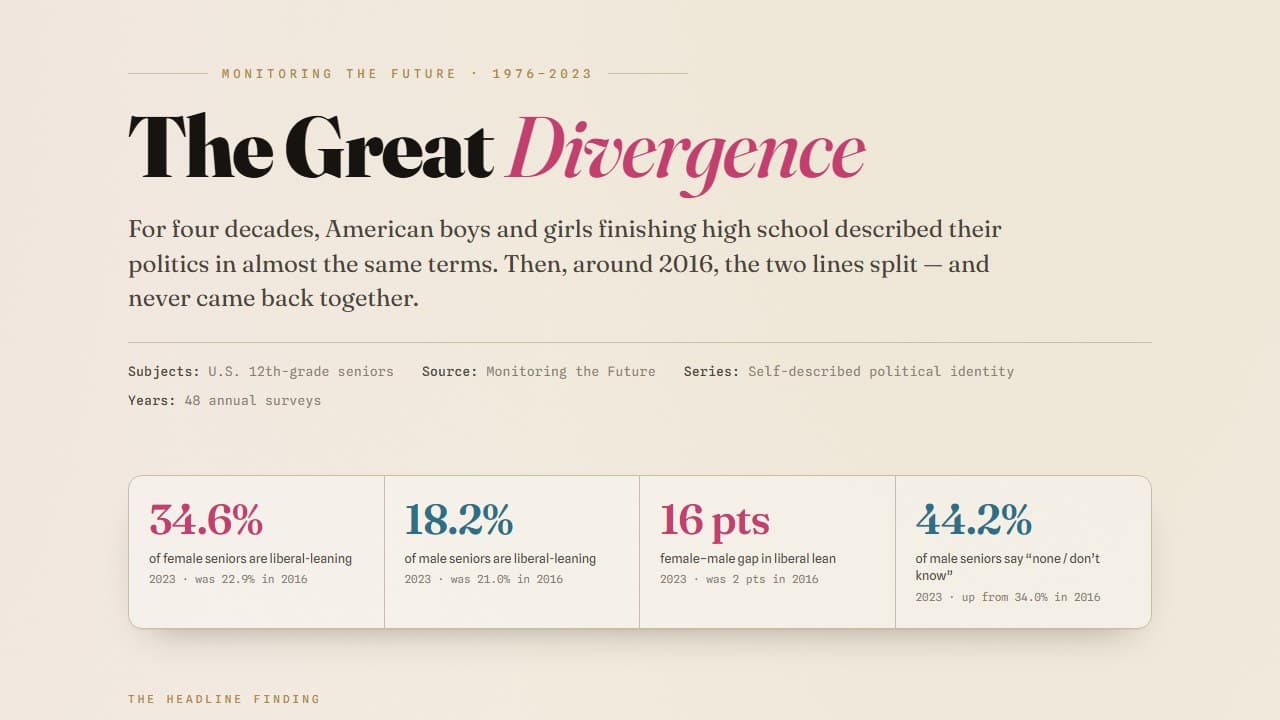
BlogThe Great Divergence: Teen Political Identity
Track how U.S. high school seniors describe their political identity from 1976-2023, with gender gaps, ideological spectrum shifts, and post-2016 decomposition views.
 Blog
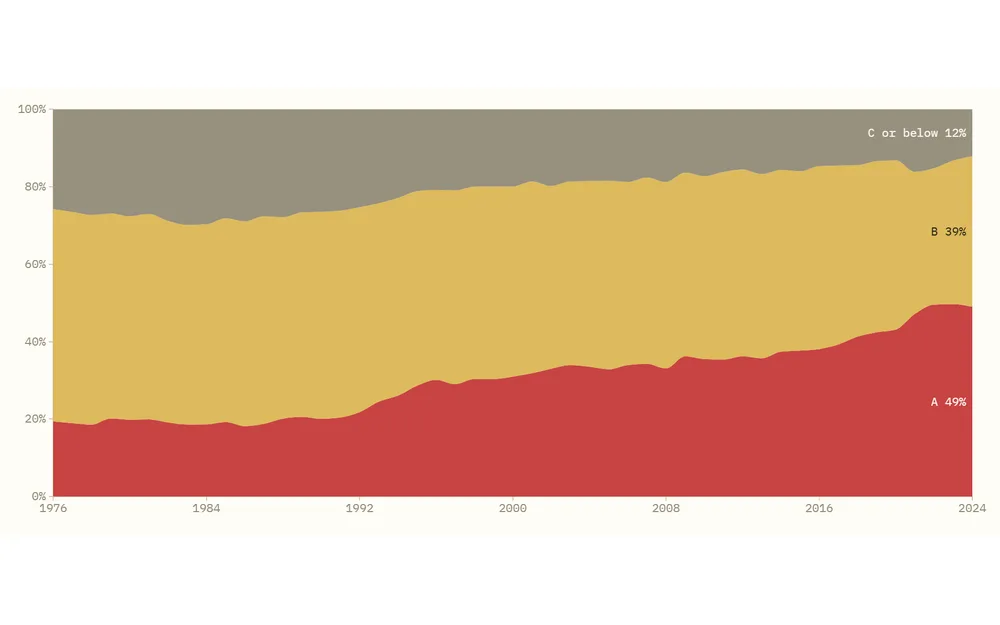
BlogLake Wobegon High — Fifty Years of Grade Inflation in American High Schools
In Garrison Keillor’s fictional town, all the children are above average. In actual American high schools, they are now mostly A students: the share of seniors reporting an A average has more than doubled since 1976, while truancy hasn’t…
 Blog
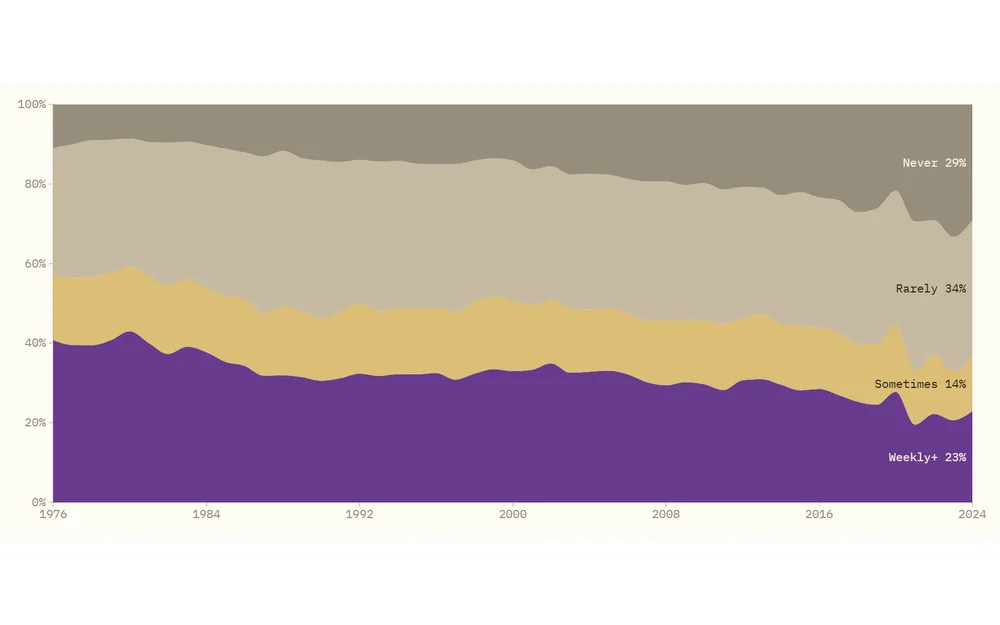
BlogLosing Their Religion — Faith Among American High School Seniors, 1976–2024
Every year since 1976, America’s high school seniors have been asked how often they attend religious services and how much religion matters in their lives. The pews emptied slowly, then quickly. But the more surprising finding is who lef…
 Blog
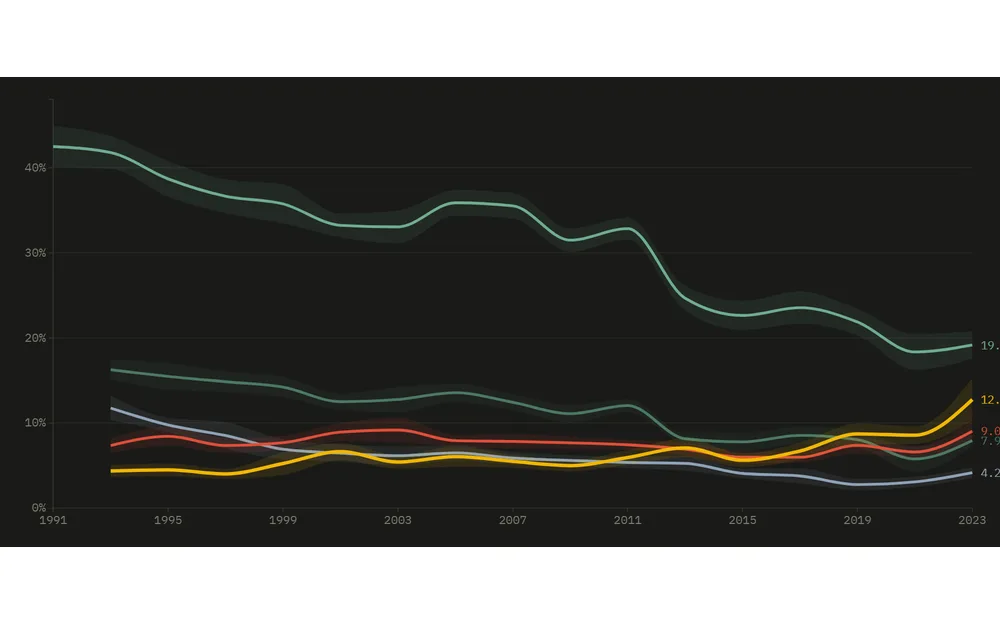
BlogSafer and More Afraid — The Paradox of Violence in American Schools, 1991–2023
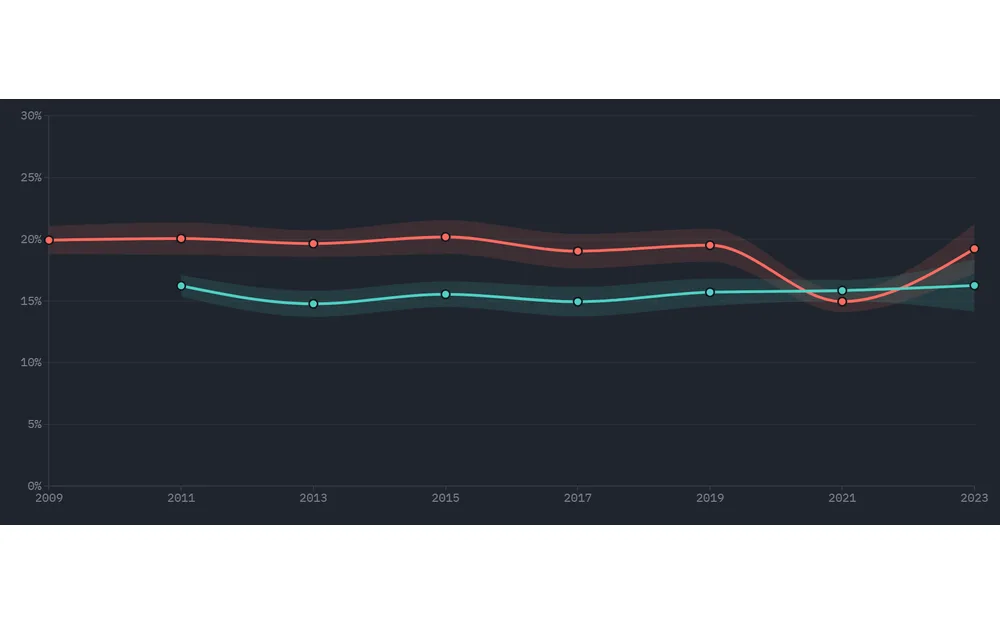
By every measure of actual violence, American high schools are far safer than in the 1990s: fights cut in half, weapons on campus down two-thirds. Yet the share of students too afraid to go to school at all has tripled. Thirty years of d…
 Blog
BlogScars That Don't Show — Bullying and the Mental Health of American Teens
One in four American high schoolers is bullied — in the hallway, on the phone, or both. The bruises are rare. The despair is not: bullied teens report sadness, suicidal thinking, and suicide attempts at rates two to six times higher than…
 Blog
BlogThe Diploma Divide Comes for the Prom — Teen Politics by Sex and Parental Education, 1976–2024
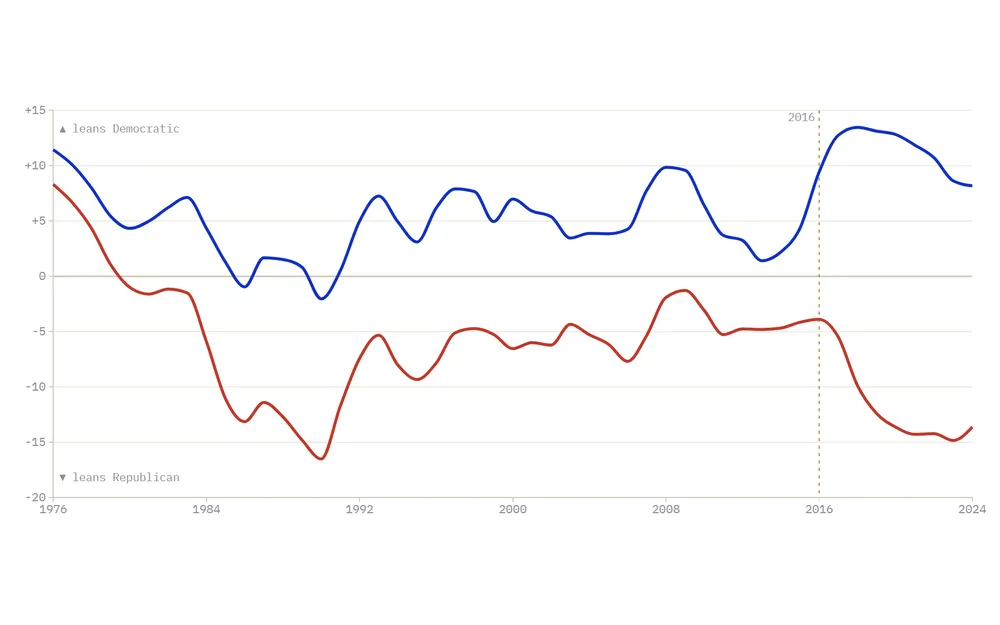
The “Trump effect” on teenage politics is usually told as a story about boys and girls. Follow half a million high school seniors across five decades and a second fault line appears: whose parents went to college. After 2016, daughters o…
 Blog
BlogThe Great Sadness — Three Decades of Teen Mental Health, 1991–2023
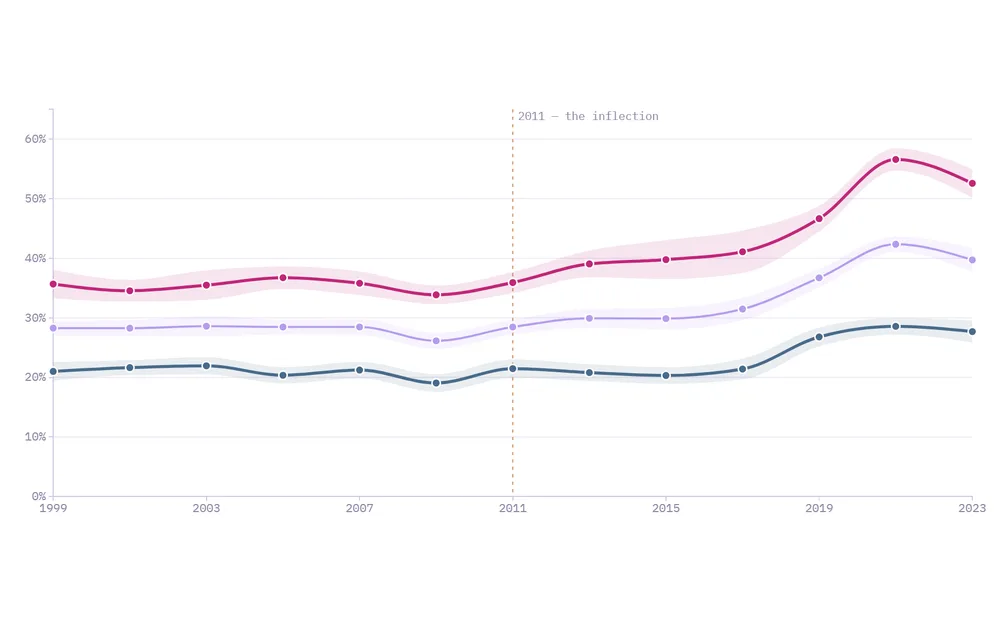
Around 2011, something broke. After a decade of stable — even improving — mental health, American teenagers, and especially teenage girls, began reporting sadness and suicidal thinking at rates the CDC’s survey had never recorded. By 202…
 Blog
BlogThe Great Withdrawal — How American Teens Stopped Dating, Working, Drinking, and Going Out
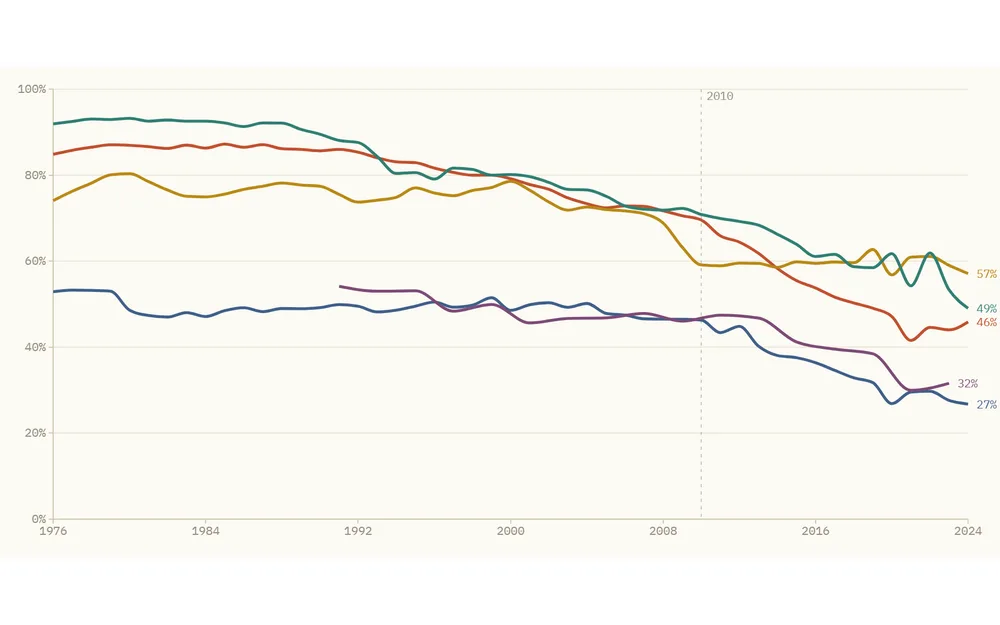
Dating. Going out at night. The after-school job. The first beer. The first everything. Across fifty years of surveys, every classic marker of teenage social life is in retreat at once — most of them starting their slide around 2010, non…
 Blog
BlogThe Sleep Recession — American Teens and the Eight-Hour Night, 2007–2023
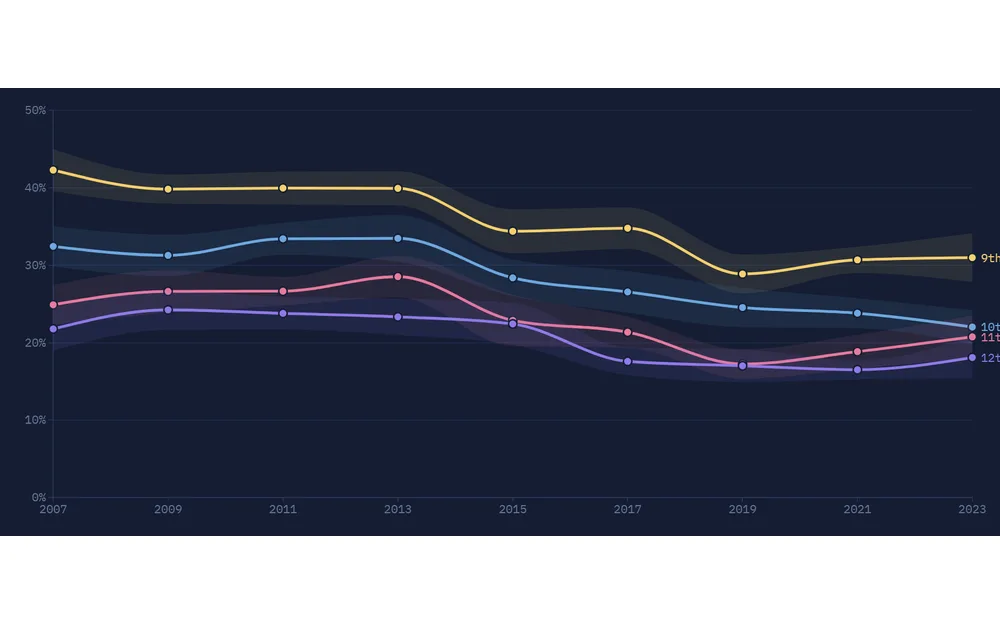
Pediatricians say teenagers need eight to ten hours of sleep. In 2007, fewer than a third of American high schoolers got even the minimum on a school night. Sixteen years later it is fewer than a quarter — and the students getting five h…
 Blog
BlogThe Vanishing Cigarette — How Teen Smoking Died and What Replaced It
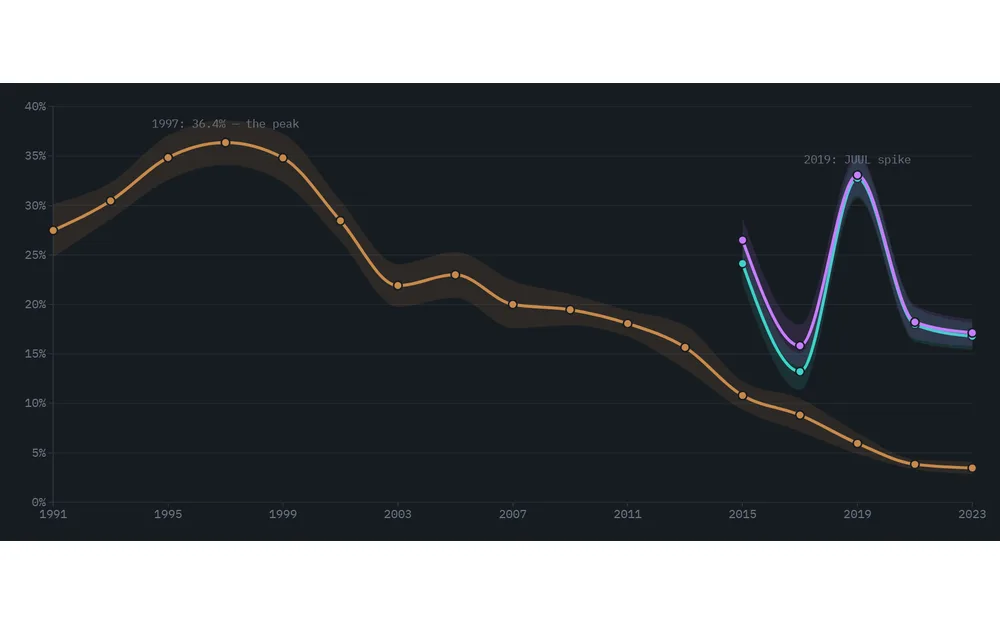
In 1997, more than one in three American high schoolers smoked. Today it is one in thirty — the greatest public-health victory in the history of youth surveys. But nicotine didn’t leave the building. It changed its clothes, learned to ta…
 Blog
BlogThe Weight of Home — Adverse Childhood Experiences and Teen Suicidality, 2023
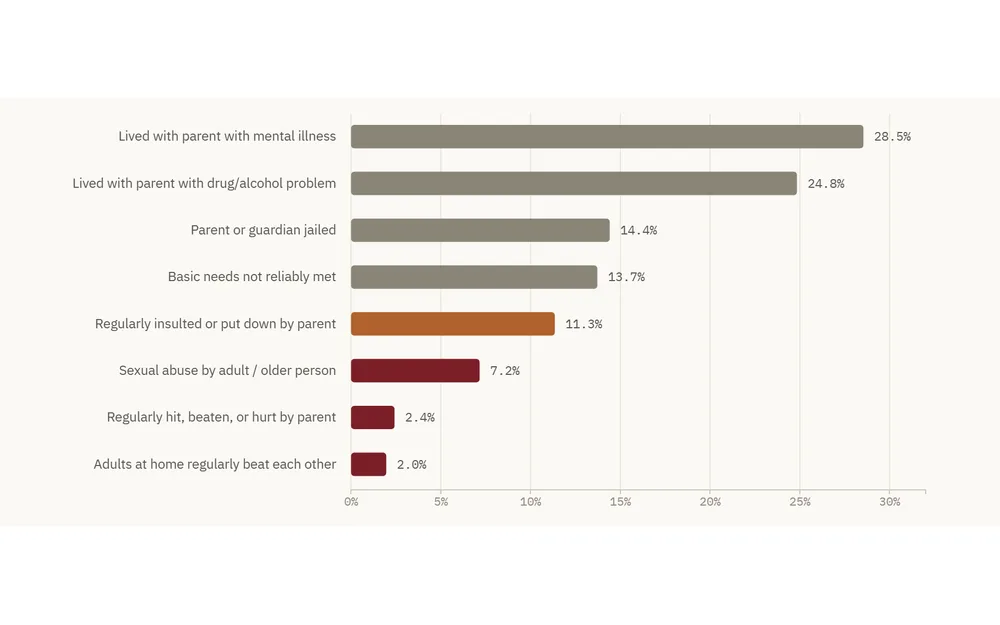
In 2023, for the first time, the CDC’s national youth survey asked high schoolers a battery of questions about what happened inside their childhood homes — abuse, a parent’s addiction or mental illness, jail, hunger. Half of students rep…
 Blog
BlogWithin Reach: Teen Drug Availability
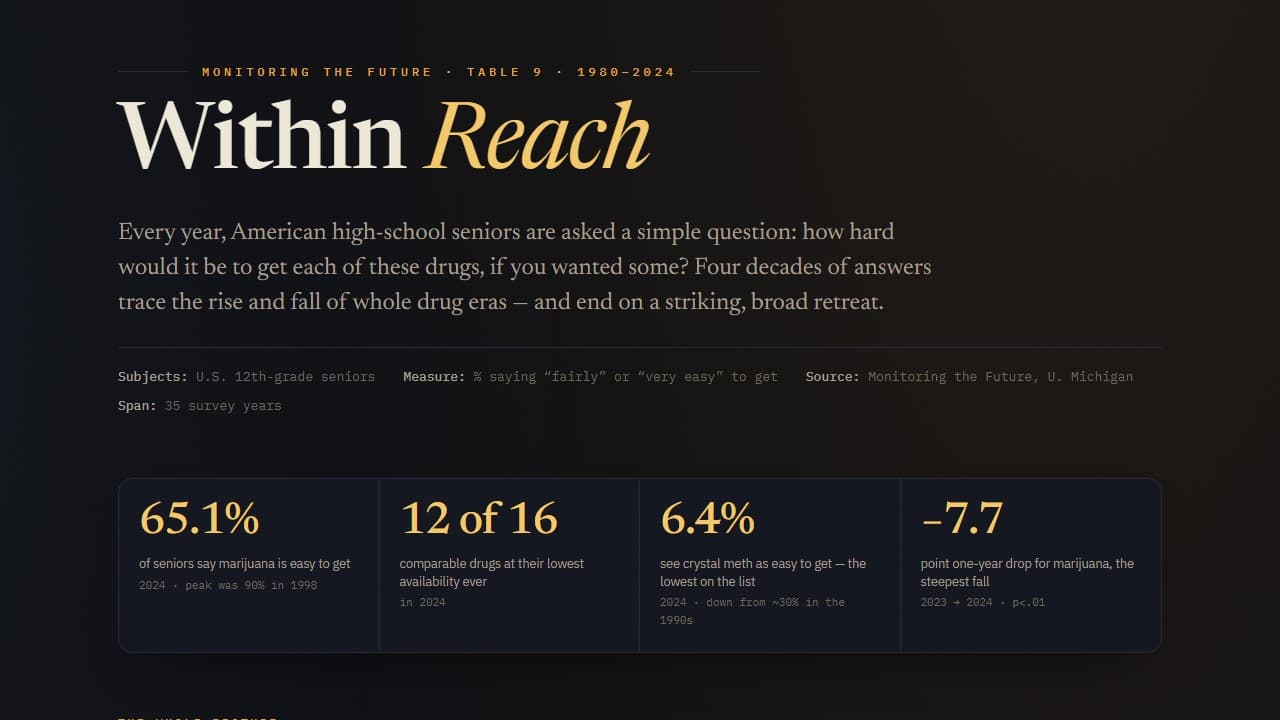
Read four decades of Monitoring the Future survey data on how available teens think drugs are, comparing substances, grade levels, long-run declines, and 2024 levels.